
By Alex Drummond, Editor-in-Chief · April 25, 2026 · Fact-checked by Maya Chen
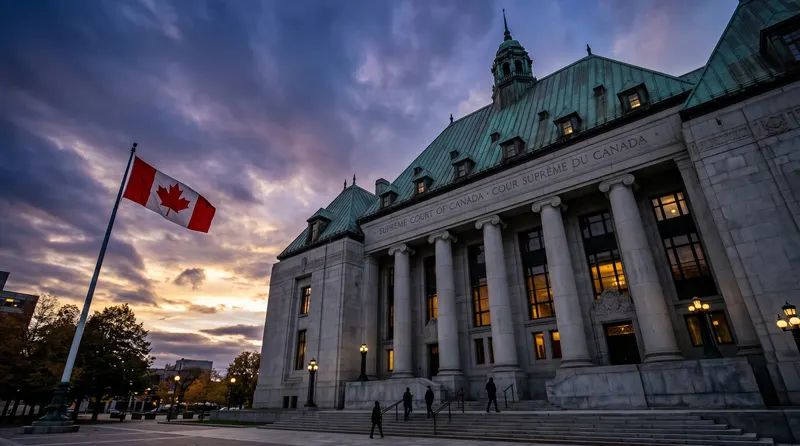
The lineup of provinces preparing to argue before the Supreme Court of Canada in the Ontario online gambling reference is now substantially larger than it was when the appeal was first filed in December. The Attorney General of Alberta was granted leave to intervene on April 14, joining a case that will determine whether Ontario can ever permit its regulated poker players to compete against opponents in jurisdictions outside Canada. Quebec, through Loto-Quebec, was confirmed as a fourth appellant on April 2, joining the lottery corporations of British Columbia, Manitoba, and the Atlantic provinces.
The case carries unusual consequence for poker specifically. Online peer-to-peer poker is the most liquidity-sensitive product in regulated iGaming, and Ontario's ring-fenced market has been pointed to by operators and players alike as a structural ceiling on the size of games available in the province. A ruling in Ontario's favour would, in principle, clear the legal path for the province to pool players with international markets such as the GGPoker dot-com network or Stars' Channel network. A ruling against would lock the closed model in place indefinitely.
Where the Case Stands
The matter at the Supreme Court is the appeal of a 4-1 decision the Ontario Court of Appeal released in November 2025. That ruling, in Reference re iGaming Ontario, found that the province's proposed pooled-liquidity model would not violate Canada's Criminal Code, provided iGaming Ontario continues to "conduct and manage" the gaming. Ontario could, in principle, sign agreements with foreign jurisdictions and allow its players to compete with overseas opponents under provincial oversight.
The decision was opposed by the Canadian Lottery Coalition, a group founded in 2022 that represents the government-owned lottery corporations of British Columbia, Manitoba, the Atlantic provinces, and now Quebec. Members of the coalition filed the notice of appeal in December within the 30-day window, and submitted their factum on February 13. The coalition argues that the Court of Appeal majority misread the Criminal Code's "in that province" language, sidestepped the Supreme Court's earlier Earth Future decision, and based its conclusion on an unrealistic assumption that Canadians outside Ontario would be barred from the proposed games.
Ontario has yet to file its factum. Once it does, the case proceeds to scheduling, with the actual hearing likely months away.
What Alberta's Intervention Means
Alberta filed its motion to intervene on March 17, ten days before its regulated iGaming framework was originally expected to take its first commercial steps. The province was granted leave on April 14. Under the order, Alberta may file a factum of up to 10 pages and present a five-minute oral argument when the matter is heard, although it cannot take a position on the disposition of the appeal, raise new issues, or duplicate arguments made by the parties.
The province's stated reasoning telegraphs its sympathies. Alberta's motion noted that its iGaming legislation, like Ontario's, does not prohibit individuals outside Canada from participating in games run by provincially regulated operators. The province argued the federal Criminal Code "should be interpreted in a flexible and broad manner so that it does not conflict with valid provincial legislation regulating gaming." That phrasing aligns Alberta with Ontario rather than the lottery coalition.
Alberta's regulated iGaming market is scheduled to launch on July 13, with major brands including bet365, DraftKings, FanDuel, GGPoker, PokerStars, 888poker, and BetMGM Poker preparing for licensure. The province expects to operate under a closed-liquidity rule similar to Ontario's at the outset, but Service Alberta and Red Tape Reduction Minister Dale Nally has previously stated that Alberta intends to pursue shared liquidity with Ontario "at or soon after launch." The Supreme Court ruling will significantly shape both whether and when that pooling can extend beyond inter-provincial agreements to include international jurisdictions.
The Players in the Case
| Party | Status | Position |
|---|---|---|
| Atlantic Lottery Corporation | Appellant (filed Dec 10, 2025) | Reject Ontario's proposal |
| British Columbia Lottery Corp. | Appellant (Dec 2025) | Reject Ontario's proposal |
| Manitoba Liquor and Lotteries | Appellant (Dec 2025) | Reject Ontario's proposal |
| Loto-Quebec | Appellant (April 2, 2026) | Reject Ontario's proposal |
| Attorney General of Ontario | Respondent | Defend the Court of Appeal majority |
| Attorney General of Alberta | Intervener (granted April 14, 2026) | Flexible interpretation of federal law |
| Canadian Gaming Association | Approved intervener | Pro-industry position expected |
| Flutter Entertainment PLC | Approved intervener | Operator of FanDuel/PokerStars network |
The interveners list reflects how unusually high the stakes are for both the regulatory framework and for individual operators. Flutter Entertainment, which owns the global PokerStars network and FanDuel, has the most to gain from a favourable ruling. Its PokerStars dot-com platform serves the rest of Canada outside Ontario already, and would likely be a candidate for any Ontario-international pool. The Canadian Gaming Association represents most major operators with skin in the game.
What It Means for Poker Players
For the foreseeable future, nothing changes. Ontario's six regulated poker rooms, GGPoker, 888poker, BetMGM Poker, PokerStars Ontario, PartyPoker Ontario, and Bwin Ontario, continue to operate within ring-fenced player pools restricted to those physically located in Ontario. The closed model will remain in place at least until the Supreme Court rules and any subsequent regulatory framework is built. That process is unlikely to conclude before late 2026 at the earliest.
Even with a ruling in Ontario's favour, several layers of work would follow before any Ontario player joins an international game. The AGCO would need to amend Standard 3.02 of the Registrar's Standards for Internet Gaming, which currently requires every operator to verify all players are physically located in Ontario. iGaming Ontario would need to negotiate agreements with foreign regulators or international operators, decide which jurisdictions qualify, and update operating agreements with its registered providers.
The most likely first move is shared liquidity with Alberta rather than international pooling. Inter-provincial agreements do not depend on the federal Criminal Code question now before the Supreme Court, and Alberta's launch on July 13 creates a natural opportunity to negotiate one. Such an arrangement would expand Ontario's poker player base by an estimated 200,000 to 300,000 active accounts based on Alberta's population profile, modest by international standards but meaningful for tournament guarantees and cash game traffic.
Wider Implications
The case sits at an intersection of several Canadian regulatory threads. The federal government, under Prime Minister Mark Carney's recently elected Liberal majority, is also weighing Bill S-211, the National Framework on Sports Betting Advertising Act, which has passed the Senate. At the provincial level, Ontario is dealing simultaneously with the Liberal-tabled Bill 107 on advertising restrictions and the May launch of the BetGuard centralized self-exclusion platform. The pace of regulatory activity has accelerated noticeably as the iGaming market completes its fourth year.
The Supreme Court decision, when it comes, will not only settle the international liquidity question but also clarify the constitutional limits of provincial gaming authority for the first time in over two decades. The 2007 Earth Future decision was the last comparable case, and lottery corporations argue it should govern this matter. Ontario contends Earth Future was decided on different grounds and is not binding here. Whichever interpretation the Supreme Court adopts will shape how every Canadian province approaches online gambling regulation for years to come.
For Ontario poker players, the immediate practical question is when, not whether, the closed-liquidity model evolves. The case before the Supreme Court will determine the upper bound of that evolution.