
By Alex Drummond, Editor-in-Chief · April 24, 2026 · Fact-checked by Maya Chen
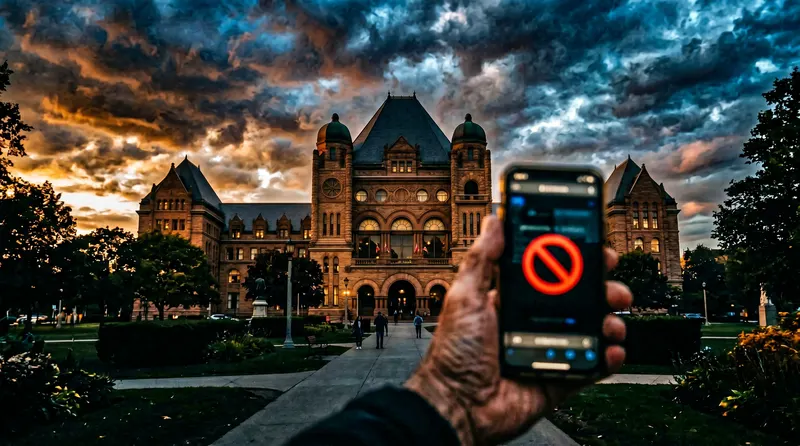
An Ontario Liberal MPP has tabled legislation that would ban all online gambling advertising in the province, a measure that, if enacted, would fundamentally alter how the province's 50 licensed iGaming operators reach their player base. Bill 107, titled the Stop Harmful Gambling Advertising Act, 2026, cleared its first reading in the Legislative Assembly on April 20 and has been ordered for second reading, with debate scheduled for mid-May.
The bill's author, Lee Fairclough, serves as the Liberal critic for mental health, addictions, and homelessness. She frames the legislation explicitly as a response to what she describes as a public health crisis that has emerged in the four years since Ontario opened its regulated iGaming market to private operators on April 4, 2022. The bill is co-sponsored by fellow Liberal MPPs Stephen Blais, Ted Hsu, and interim party leader John Fraser.
What the Bill Would Do
The text of Bill 107, published by the Legislative Assembly of Ontario, is narrow in scope but broad in effect. It amends the Gaming Control Act, 1992 by adding a single new section prohibiting any person who operates an electronic gaming site, or any person acting on their behalf, from advertising or otherwise promoting the site or anything offered on it. The definition of an electronic gaming site is drawn directly from the iGaming Ontario Act, 2024, meaning the prohibition would apply to every licensed online gambling operator registered with the province.
Three exceptions are built into the draft. Imported publications or retransmitted radio and television broadcasts from outside Ontario remain permissible. Literary, dramatic, musical, or artistic works that depict gambling are also excluded, provided no consideration is paid for the reference. And editorial content, including reports, commentary, and opinion pieces, falls outside the prohibition so long as no operator money changes hands for the coverage. These carve-outs were presumably designed to avoid constitutional challenges over freedom of expression.
The enforcement mechanism is severe. An individual convicted of breaching the advertising prohibition faces a fine of up to C$100,000, while a corporation could be liable for up to C$1 million. A second conviction triggers automatic revocation of a supplier's registration, language designed specifically to prevent operators from treating fines as a cost of doing business.
The Public Health Argument
Fairclough's stated rationale for the bill centres on a sharp increase in gambling-related harm measurement data. Calls to ConnexOntario, the province's mental health and addictions helpline, have increased by 254 per cent since the regulated market launched, according to figures cited in her statement when she tabled the bill. Roughly 76 per cent of all gambling-related questions received by the helpline now concern online gambling specifically, a share that dwarfs the product's proportion of overall gambling activity in the province.
"This bill addresses the growing public health emergency linked to gambling addiction in our province, which has surged following the 2022 decision to open the online gambling sector to private firms," Fairclough stated in the Legislative Assembly. "Since that time, there have been 50 private gambling companies advertising and promoting their sites across platforms."
The preamble to the bill itself extends that framing. "The proliferation of gambling advertising normalizes gambling and corrupts the integrity and culture of sports," it reads. "Banning the advertising of electronic gambling sites is therefore in the public interest to protect public health." That language echoes the approach taken by some European jurisdictions, notably the Netherlands and Spain, which have moved to restrict or ban gambling advertising in recent years.
Industry Response
The Canadian Gaming Association issued a public statement opposing Bill 107 on April 22, two days after its introduction. The industry group argued that Ontario's existing regulatory framework already constitutes "some of the most rigorous marketing regulations in North America." Licensed operators are already barred from advertising promotional bonuses outside their own websites, apps, and direct customer channels, and are prohibited from marketing to high-risk cohorts, minors, or self-excluded players.
The Alcohol and Gaming Commission of Ontario strengthened these rules further in 2024 by restricting the use of athletes and celebrities in advertisements, a change that followed public backlash over Toronto Raptor Jamal Murray and other prominent figures appearing in sportsbook campaigns. That amendment took effect in February 2025 and has narrowed the creative latitude available to operators substantially.
The CGA's core objection to Bill 107 is counter-intuitive but worth considering. The association argued the legislation would "essentially allow illegal operators to flood social media with posts, making it impossible for Ontarians to identify licensed providers while weakening the authority of the AGCO." Illegal offshore operators, which currently compete with the regulated market for consumer attention, are not constrained by Ontario law and could theoretically fill the advertising void left by licensed competitors. The province's channelization rate, the share of gambling activity occurring through licensed operators, currently sits at 83.7 per cent according to iGaming Ontario figures.
Political Reality
Despite the urgency expressed by supporters, Bill 107 faces an uphill legislative path. The Progressive Conservatives hold 80 seats in the 124-seat Ontario Assembly, while the Liberals hold 14. That leaves Fairclough's caucus as the third party rather than the official opposition, a status that sharply limits the practical influence of private member's bills. The NDP forms the official opposition.
A comparable Liberal effort in 2023, a motion rather than a bill, sought to tighten iGaming marketing rules but did not advance. John Fraser, who is now co-sponsoring Bill 107, introduced that earlier attempt. The Liberal caucus has built institutional memory around the file without managing to move policy through the legislature.
Fairclough has indicated she intends to build public support for the measure in advance of the May debate, including through a petition. Whether that mobilization translates into sufficient cross-bench support to force a meaningful vote remains uncertain. The bill is not formally on the government's legislative agenda.
Federal Parallel
Ontario's provincial debate unfolds against a federal backdrop. Bill S-211, the National Framework on Sports Betting Advertising Act, has already passed the Senate and awaits House of Commons consideration under Prime Minister Mark Carney's newly secured Liberal majority. The federal bill would establish a national framework for restricting sports betting advertising, an area of law that until now has been largely left to the provinces.
If S-211 advances through the Commons, it could constrain some categories of advertising regardless of what Queen's Park does with Bill 107. That federal trajectory reduces some of the stakes around the Ontario bill in practical terms, since a national framework could impose similar restrictions whether or not Fairclough's legislation passes.
What It Would Mean for Poker
Ontario's six regulated poker rooms, GGPoker, 888poker, BetMGM Poker, PokerStars Ontario, PartyPoker Ontario, and Bwin Ontario, would all fall under the advertising prohibition if Bill 107 became law. That includes television, social media, sponsorship, and paid promotional content, but not direct customer channels such as email or the operators' own websites and apps.
Peer-to-peer poker occupies a unique position in the Ontario iGaming market. The product generated C$59 million in revenue during the 2024-25 fiscal year, a fraction of the C$2.2 billion produced by online casino or the C$654 million from sports betting. Poker players tend to be more engaged and longer-tenured than casino or sportsbook customers, meaning the sector's growth has relied more heavily on word of mouth, tournament series announcements, and player community engagement than on mass advertising. A total ban would still hurt operators with smaller market share that rely on paid acquisition, but the poker product has never been as dependent on broadcast and social marketing as sports betting.
The bill also arrives in the same regulatory cycle as the BetGuard centralized self-exclusion platform, which iGaming Ontario unveiled last week and is scheduled to launch in May. Together, the two measures, one a government-led player protection tool and the other an opposition-proposed advertising restriction, illustrate the shift in Ontario's regulatory conversation away from market entry and toward consumer safeguards. That shift was flagged in the AGCO's updated Registrar's Standards, published on April 12, and is consistent with broader international trends.
Second reading of Bill 107 is expected in mid-May. The debate, even if it does not produce a passing vote, will offer the first substantive legislative discussion of advertising policy under the regulated Ontario iGaming framework.