
By Alex Drummond, Editor-in-Chief · June 16, 2026 · Fact-checked by Maya Chen
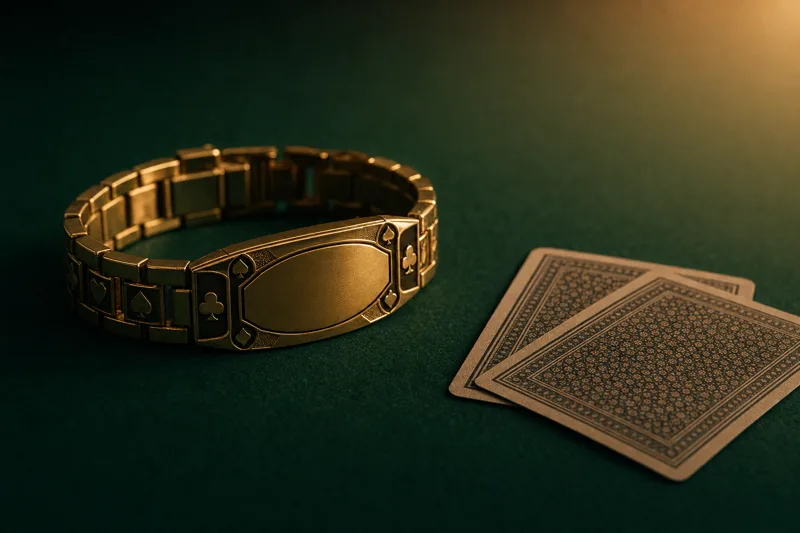
LAS VEGAS - The largest single first-place cash on the 2026 World Series of Poker schedule belongs to Adrian Mateos. The 31-year-old Madrid pro, who has spent the past decade as one of the consistent presences on the Super High Roller circuit, took down Event #41, the $250,000 Super High Roller No-Limit Hold'em, at the Horseshoe and Paris in Las Vegas on Monday night, defeating American all-time money leader Bryn Kenney in a short heads-up cap for the US$4,334,411 first prize and his sixth career WSOP gold bracelet. The bracelet ceremony, held in the Paris Theater at 12:18 a.m. local time on Tuesday morning, lifted Mateos to a published-record milestone. By the PokerNews bracelet ceremony wrap, the sixth-bracelet result makes Mateos the youngest player in WSOP history to win six career gold bracelets at the age of 31.
The final hand of the tournament was a Doyle Brunson-honouring cooler. Mateos opened from the small blind for 800,000. Kenney three-bet from the big blind to 2,800,000. Mateos called. The flop came king-high, with two more low cards on the board. Kenney continuation-bet a small sizing on the flop with his ten-nine of red suits, hoping to push Mateos off the third-pair-better-kicker holdings that he ranged on his pre-flop range. Mateos called. The turn was the eight of diamonds. Kenney barreled again, sizing up to a half-pot bet. Mateos called. The river was the three of diamonds. Kenney moved all-in for his remaining stack of approximately 12 million chips. Mateos called instantly. The cards were turned over. Kenney showed ten-nine offsuit for a top-pair-second-kicker. Mateos showed the ten-deuce of clubs, the Doyle Brunson hand, for the same top-pair-but-better-kicker on the river. The board paired the deuce on the river. Mateos had been ahead on the turn and the river. The chip stack shifted in one orbit. Kenney was eliminated in second.
The Heads-Up Cap
Mateos entered heads-up play with a roughly four-to-one chip lead over Kenney. The two had played a long three-handed period against David Einhorn of the United States, who was eliminated in third for US$1,862,941 on a brutal cooler in which his pocket jacks ran into Mateos's pocket queens on a queen-high flop. Mateos's significant Day 3 momentum, by the published PokerNews live blog account, came on the back of three large pots in the late three-handed period and a clean run of cards that pushed his chip share well into the favorable range before the heads-up started.
Kenney's heads-up effort was a working one. The all-time live tournament money leader picked up two pre-flop double-ups inside the opening orbits of heads-up to close the gap from four-to-one to roughly two-to-one. Mateos absorbed the early pressure and waited for the structural hand that he closed on. The final-hand ten-deuce, by Mateos's own brief post-game framing to the PokerGO booth, was a pre-flop range-disguising call from the small blind. "I called the three-bet with the Brunson," Mateos told the booth. "I had position on the flop, I had the right pot odds with my speculative hand. The river was the river. I called the all-in." The brevity of the Mateos post-game framing, on the prior published pattern across his five bracelet ceremonies, is the structural through-line. Mateos has been the more taciturn member of the Super High Roller community for the past decade, by published interview record, and the sixth bracelet ceremony was no exception.
| Place | Player | Country | Prize (US$) |
|---|---|---|---|
| 1 | Adrian Mateos | Spain | $4,334,411 |
| 2 | Bryn Kenney | United States | $2,776,634 |
| 3 | David Einhorn | United States | $1,862,941 |
| 4 | Sean Winter | United States | $1,312,037 |
| 5 | Jason Koon | United States | $972,375 |
| 6 | Samuel Mullur | Austria / Sweden | $760,417 |
| 7 | Brandon Wilson | United States | $629,397 |
| 8 | Phil Ivey | United States | $553,270 |
| 9 | Michael Moncek | United States | $518,518 |
The Mateos Read
Mateos's sixth career bracelet, on the PokerNews published-record framing, makes him the youngest player in WSOP history to capture six gold bracelets, at age 31. The five-bracelet count he had been carrying since 2024 had placed him alongside Vanessa Selbst and Brian Hastings at the same career tier. The sixth bracelet now sets a new under-32-age record. His prior five bracelets cover the 2013 $5,000 No-Limit Hold'em Six-Handed, the 2015 World Series of Poker Europe Main Event, the 2017 $10,000 Heads-Up No-Limit Hold'em, the 2021 Online $25,000 Super High Roller on GGPoker, and the 2024 Online $1,000 Eight-Game Mix on GGPoker. The 2026 $250,000 Super High Roller is his first major live summer bracelet since 2017 and his largest single tournament cash on the WSOP archive, at US$4,334,411, surpassing his 2015 WSOPE Main Event for €1,073,000 by a factor of approximately four.
The Spanish high-roller commercial presence on the European and global circuit has been the dominant national identity at the major-event level for the past five years. Mateos, alongside Sergio Aido and Juan Pardo, has consistently fronted the Spanish elite contingent at the Triton Series, the Super High Roller Bowl, and the WSOP Europe events. The Spanish national tournament-tax framework, by the published Spanish tax-authority rulings, places major-event live cashes in the 19-to-26 percent range for tournament-cash income, on a sliding scale that depends on residency and prior-year volume. The US$4,334,411 first prize, on the United States Internal Revenue Service withholding side, ran the standard 30 percent non-resident withholding ahead of any treaty-based reimbursement claim that Mateos may file under the United States-Spain double-taxation treaty.
The Kenney Read
Bryn Kenney's runner-up cash of US$2,776,634 lifted his Hendon Mob all-time live tournament earnings count from US$84.8 million to US$87.6 million, extending his lead on the second-place all-time earner by an additional US$2.8 million. The runner-up is also Kenney's largest single WSOP cash on the open-event archive, surpassing the 2017 $111,111 One Drop High Roller's third-place result for US$1.6 million. The bracelet gap that this newsroom flagged in Monday morning's preview piece, on the prior 2014 first-bracelet and 2024 second-bracelet history, remains the structural through-line. Kenney's three Super High Roller career runner-up finishes (the 2017 One Drop, the 2024 Triton London $250K, and now the 2026 WSOP $250K Super High Roller) have produced a cumulative runner-up prize total in excess of US$11 million across the past nine years. The bracelet count remains at two.
The Ivey Read
Phil Ivey's eighth-place finish for US$553,270, the elimination hand on which he ran pocket jacks into Bryn Kenney's pocket queens at the eight-handed segment of the final table, brings his 2026 series-cash count to one notable cash and a min-cash-plus-one-ladder result. The 11-bracelet count remains at 11. The Phil Hellmuth all-time-bracelet chase, on the published archive, remains at a four-bracelet deficit. Ivey's bracelet-day appearance was the first 2026 final table of his summer, and is, on the prior multi-year pattern, the kind of result that is followed by a stretch of deeper runs in the next several events. The next major-buy-in event on Ivey's likely calendar, by the published schedule, is the WSOP Main Event opening on July 2.
The Canadian Read
Daniel Negreanu, the Toronto-and-Las-Vegas pro who finished Day 1 of Event #41 fourth in chips with 2,970,000, did not survive Day 2. The published SSBCrack News Day 2 wrap recorded that Negreanu was eliminated in 35th place, outside the nine-spot in-the-money payout, on the back of a Day 2 stretch where he "struggled to gain momentum" after the strong Day 1 close. Nick Petrangelo burst the money bubble at 10th, and the in-the-money payout structure ran top nine. Kristen Foxen, fresh off her sixth-bracelet $25,000 High Roller win on June 7, also entered the $250K event and busted before the in-the-money stage. The 2026 Canadian gold-event bracelet tally holds at three across the Normand-Foxen-Alcindor June 6-8 cluster, with a combined US$2,395,570 in payouts.
The Negreanu deep-stack-to-bust arc at the $250K is the second time in three days that a high-profile Canadian entered the bracelet-day stage with a top-five Day 1 chip stack and failed to convert. The structural pattern, on the present 2026 series count, is the difficulty of converting chip leads in deep-stack mixed fields. Both Negreanu's $250K Day 1 close and Mozdzen's $1,500 H.O.R.S.E. Day 2 close on Thursday produced chip-leading or top-five stacks that did not survive the next session to the bracelet result. The variance of the deep-stack tournament structure is the structural reason. The bracelet conversions across the 2026 series have come from the top-of-stack-going-in arrival, on three of the four Canadian gold-event wins, but the parallel five non-conversion arcs in 11 published Canadian Day 1 chip-leading positions across the 2026 series have produced no further bracelets.
Day 22 Schedule
The Tuesday Day 22 schedule, on the published WSOP calendar, runs nine events. Event #38 the $500 COLOSSUS plays Day 4 from 11 a.m. local with 145 players returning from the 16,269-entry total. Event #45 the $2,500 Mixed Omaha Hi-Lo / Stud Hi-Lo plays Day 3 from 12 p.m. local. Event #46 the $10,000 Pot-Limit Omaha 8-Handed Championship opens at 12 p.m. local. Event #43 the $800 Deepstack 8-Handed plays Day 3 from 12 p.m. local. The next Canadian deep-stack possibility, on the prior cash-history pattern, is the $10,000 Pot-Limit Omaha Day 1 chip-leading bag, on the same mixed-game format that produced the Normand and Alcindor Canadian bracelets earlier in the series.